Automate document processing into Microsoft SQL Server

Get data from your documents into Microsoft SQL Server

Invoices and receipts
Automatically extract invoice and receipt data into SQL Server tables to power business intelligence, support custom applications and enable real-time financial reporting.
Compliance forms and reports
Automatically extract compliance data from audit reports and regulatory forms into SQL Server to maintain audit readiness, streamline regulatory reporting and support comprehensive compliance analytics across your organization.
HR forms and resumes
Automatically extract employee data from resumes and onboarding forms into SQL Server to power talent analytics, improve workforce planning and streamline HR data management.
Purchase orders and inventory
Automatically extract procurement data from purchase orders and inventory sheets into SQL Server to enable cost analysis, optimize supplier management and support real-time inventory tracking across your supply chain.
How to automate document processing into Microsoft SQL Server
Automatically send your documents to Affinda
AI agents extract and validate key data fields
See your data appear in Microsoft SQL Server
Extract any information from any document, fast
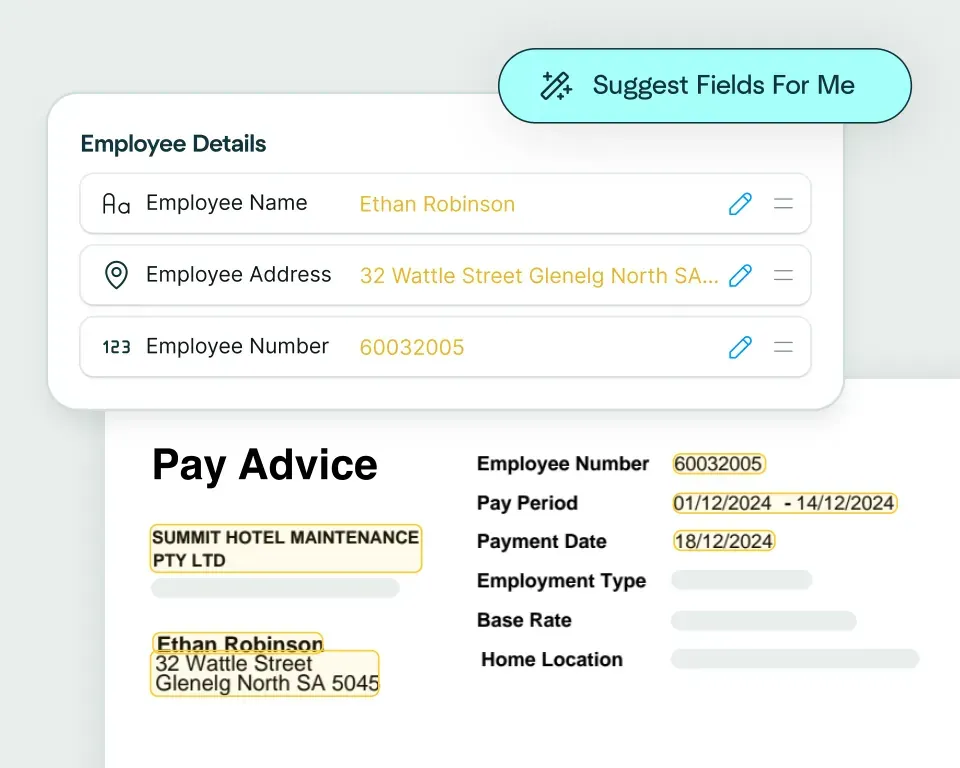
Create models in seconds
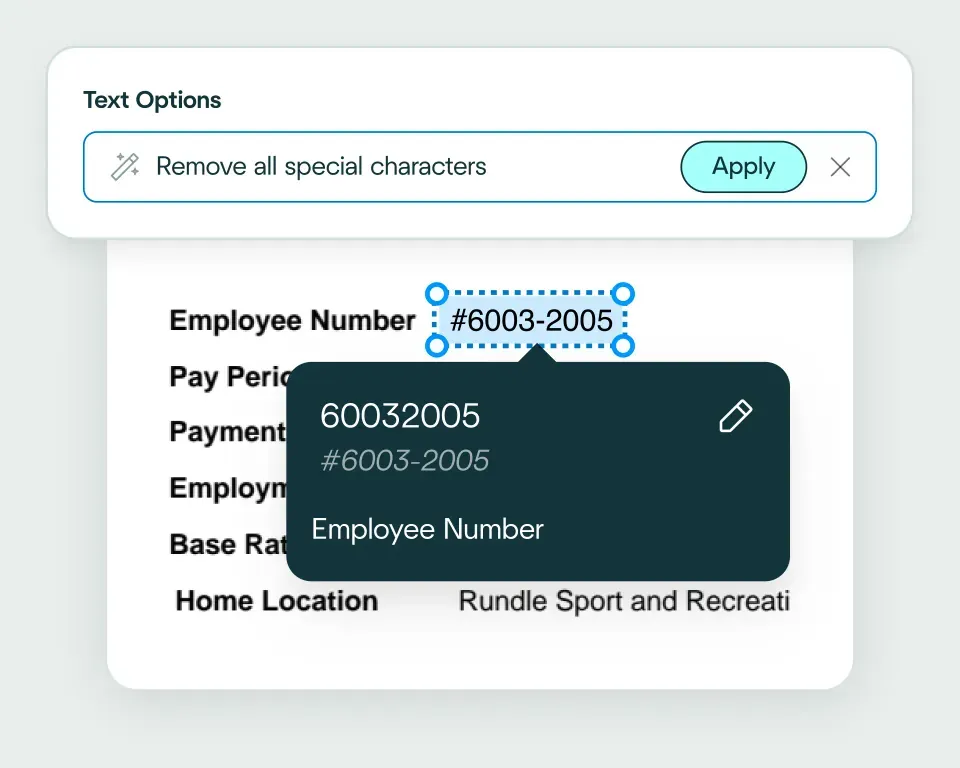
Validate and transform data
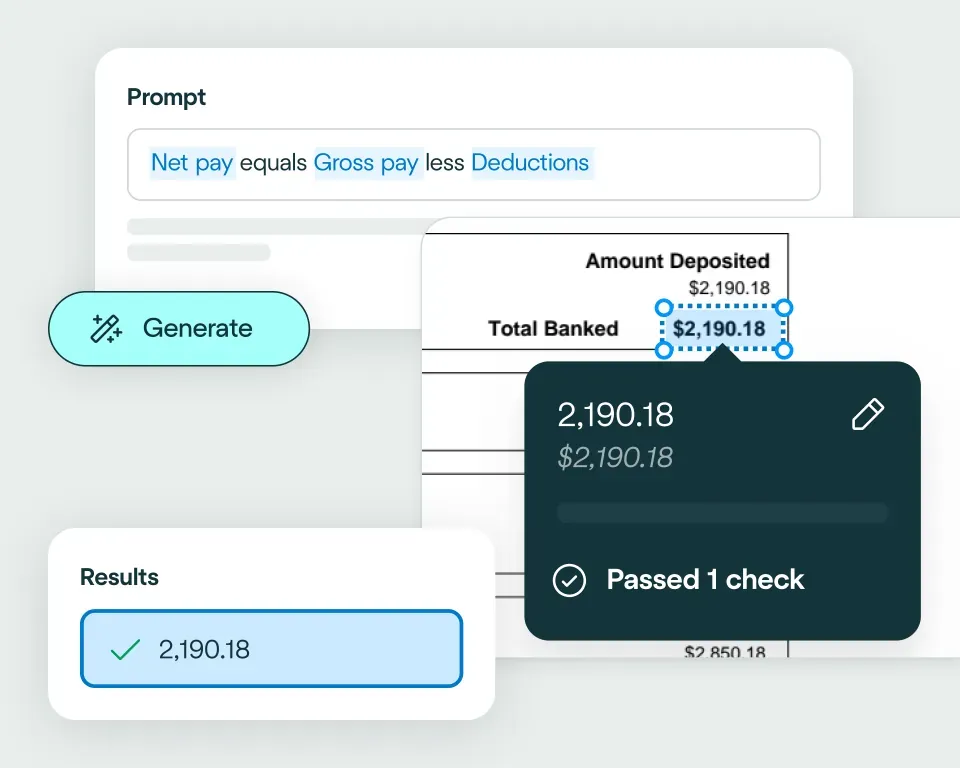
Apply your business logic
Pathway 1: Use the Agent
Pathway 2: Write your own code
No need to talk to sales. Get started now
Sign up for free
Set up your integration
Start processing


reduction in manual work
more invoices processed with no added staff
Enhanced auditability and tracking of invoice approvals


proof of delivery documents processed annually
of documents straight-through processed in the first weeks
Automatic validation of documents against ERP system


High accuracy parsing across multiple languages
Improved customer experience thanks to better structured data
Stronger compliance with international data security and software standards


documents processed annually
different document types
time saved in reviewing invoices


reduction in manual data input
reduction in compliance data errors
compliance documents processed annually
Combine the best of artificial and human intelligence

Frequently asked questions
Does Affinda integrate with Microsoft SQL Server?
Yes. Affinda's integration with Microsoft SQL Server connects your document processing directly to your database workflows. It automatically extracts, validates and loads data from invoices, compliance forms, HR documents and procurement files straight into SQL Server tables. With Affinda, you can populate your databases faster, eliminate manual data entry errors and maintain complete control over your business data through a single, connected workflow.
How does the Affinda-Microsoft SQL Server integration work?
Affinda processes documents from any source - email, upload or API - and extracts structured data like supplier details, invoice numbers, employee information and compliance dates using AI agents trained for accuracy.
Once validated, the data is automatically loaded into your SQL Server tables in the format you need, whether that's populating invoices, purchase orders, resumes or contracts for reporting, analytics or application use.
You can also configure custom validation rules, field mappings and data transformations to match your database schema and business requirements.
What types of documents can Affinda process and send to Microsoft SQL Server?
Affinda processes any document type and sends the extracted data straight into Microsoft SQL Server, including:
- Invoices, receipts and credit notes
- Purchase orders and inventory sheets
- Compliance forms and audit reports
- HR documents, resumes and onboarding forms
- Contracts and supplier statements
Whether your documents are digital PDFs or scanned images, Affinda handles them all - extracting structured data with 99%+ accuracy across multiple languages and complex layouts.
Do I need to manually upload files to Microsoft SQL Server?
No. With Affinda, you can automate document ingestion completely. To get your documents to Affinda, you have three options:
- Upload documents directly into your Affinda workspace
- Forward documents via email or configure automatic email forwarding
- Integrate your document source through APIs or cloud storage connections
Once Affinda receives your documents, data is automatically extracted, validated and loaded into your SQL Server tables - no manual file handling required.
Can I define my own validation and business rules?
Yes. Affinda lets you define custom validation rules and business logic before any data reaches your SQL Server database.
For example, you can configure rules to:
- Verify data types match your database schema requirements
- Check for duplicate records before insertion
- Validate mandatory fields are populated and formatted correctly
- Ensure compliance dates meet regulatory requirements
These validation checks maintain database integrity, prevent errors and ensure your SQL Server data is accurate and ready for analytics or application use.
Can Affinda handle bulk invoice uploads for Microsoft SQL Server?
Yes. Affinda handles bulk document processing at any scale. Whether you're loading 50 invoices a month or 50,000 a day, the platform supports high-volume uploads and automated data loading into SQL Server tables.
This makes it ideal for enterprise finance teams, procurement departments and operations groups managing large volumes of invoices, purchase orders, compliance documents and HR files that need reliable database integration.
How fast can I get started with the Microsoft SQL Server integration?
You can start processing documents into SQL Server in under an hour. Affinda's flexible integration allows you to:
- Connect securely to your SQL Server database
- Map extracted document fields to your tables and schemas
- Begin loading data immediately with automated workflows
For enterprise teams, Affinda provides API access and custom configuration options for deeper integration with your existing database infrastructure and business applications.
Is my financial data secure when using Affinda with Microsoft SQL Server?
Absolutely. Affinda follows security standards including ISO 27001:2022, SOC 2 and GDPR for security and compliance. Data is encrypted in transit and at rest, with strict role-based access controls and full audit logging. You can also select region-specific data storage to meet your organization's compliance and data residency requirements.
What are the main benefits of integrating Affinda with Microsoft SQL Server?
By integrating Affinda with Microsoft SQL Server, you can:
- Eliminate manual data entry and populate database tables automatically
- Accelerate reporting cycles and enable real-time business intelligence
- Improve data accuracy with built-in validation and schema mapping
- Maintain audit readiness with automated compliance data management
- Scale document processing without adding headcount or infrastructure